
Blog
Medium-Soft Rock & Construction Waste Processing
Deconstructing Rebar Strangulation in Optimizing Medium-Soft Rock & Construction Waste Processing: Custom Stationary Impact Crusher Guide Audits
The surging demand for limestone aggregate and construction waste recycling requires crushing equipment that balances high efficiency with strict metallurgical survival. Processing medium-soft materials is an exercise in precise kinetic application, not brute compressive force. To maximize the circuit amortization cycle, mine operators need more than just standard machines—they require custom rotor engineering and highly responsive maintenance support. The stationary impact crusher remains the absolute gold standard for this specific geology, provided its internal architecture is rigorously calibrated to withstand the unpredictable violence of embedded steel and silica spikes.
Kinetic Dominance: Medium-Soft Rock vs. Stationary Impact Architecture
You cannot squeeze soft rock into perfect cubes; you must shatter it along its fault lines.
Medium-soft rocks like limestone (typically <150MPa) and concrete rubbles possess distinct physical characteristics. Applying the slow, hydraulic compression of a cone crusher to these materials will over-pulverize the rock, generating a massive yield of unsellable dust. The stationary impact crusher excels here because its blow bars exploit the natural cleavage planes of the material.
The high-speed kinetic strike yields over 85% perfectly cubical aggregate.
Furthermore, a fixed, stationary installation provides absolute kinetic grounding. While mobile crushers suffer from inherent chassis deflection under peak load, bolting a heavy-duty impactor to a massive concrete foundation allows the rotor to deliver maximum, unyielding impact force. This static stability guarantees continuous mass flow and outlasts mobile setups in long-term, high-tonnage extraction nodes.
Custom Rotor Engineering: Absorbing Steel & Siliceous Spikes
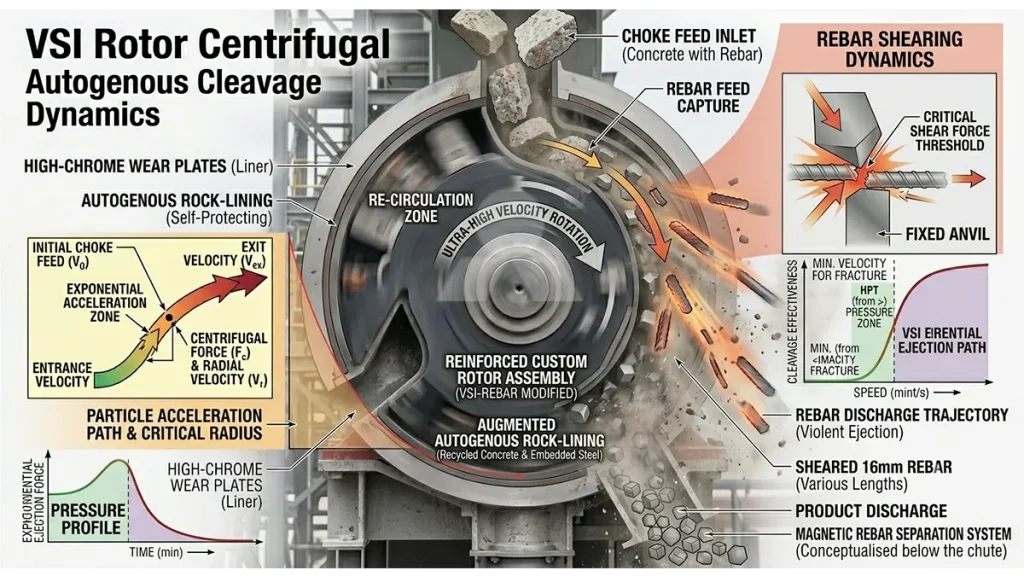
The fundamental problem with generic impact crusher is their inability to adapt. Construction waste often contains embedded 16mm sheared rebar, and limestone hardness varies unpredictably across a single quarry. A generic stationary impact crusher designed purely for 80MPa limestone possesses a lightweight rotor.
When that rotor encounters C50 concrete rubble embedded with rebar, it suffers a catastrophic stall.
The steel strangulation overcomes the rotational inertia, tripping the main breakers and violently halting the circuit. Our architectural solution mandates custom rotor engineering. By increasing the rotational mass of the rotor by up to 30%, we generate massive kinetic inertia. Coupled with reinforced welding on the rotor plates, this custom mass allows the blow bars to physically sever the steel reinforcement without dropping RPM, maintaining the production-to-yield ratio.
Matching rotor inertia to the feed material dictates the survival of the primary impact zone.
| Feed Material | Required Rotor Architecture | Kinetic Adjustment | Failure Risk (If Ignored) |
|---|---|---|---|
| Pure Soft Limestone | Standard Open Rotor | Baseline Inertia | None (Standard Flow) |
| Construction Waste (Rebar) | Heavy-Duty Custom Rotor | +30% Mass Inertia | Catastrophic Rotor Stall |
| Siliceous Limestone Blend | Reinforced Welded Rotor | High-Chrome Alloy Bars | Rapid Abrasive Hemorrhage |
Analyze the +30% Mass Inertia requirement for recycling. You cannot cut steel with a lightweight hammer. The rotor must physically overpower the tensile strength of the rebar.
Arresting Kinetic Degradation: Forensic Impact Crusher Repair
Blow bars are the highest-wear components in the circuit. The wear dilemma is absolute: the moment the strike geometry of the blow bar degrades, your aggregate becomes flaky and your energy consumption spikes. The leading cause of circuit failure in recycling is asymmetric blow bar wear. Proper maintenance determines profitability.
Field Note: I audited a plant where the operator ignored asymmetric wear. The resulting dynamic imbalance vibrated the 200kW machine so violently it tore the main bearings straight out of their housings.
Implementing professional impact crusher repair services is your only defense. This is not about sweeping dust; it is about metallurgical restoration. Our expertise focuses strictly on precise blow bar hardfacing, scheduled flipping to maintain strike geometry, and rapid replacement welding. Without rapid replacement welding capabilities on site, a shattered impact plate halts a 300 tph operation indefinitely. Regular, forensic maintenance extends the lifespan of your mining equipment and prevents temporary blockages from becoming a permanent mass balance deficit.
CI5X1213 Recycling Circuit: Repair & Kinetic Thresholds
- Drive Load: 200 kW generating continuous rotational cleavage
- Rotor Mass: Custom +30% inertia integration for steel severance
- Wear Defense: Precision hardfacing on high-chrome blow bars
- Maintenance Cycle: Strict geometric flipping protocol enforced
- Dynamic Tolerance: Zero asymmetric vibration permitted
Vetting Your Extraction Partner & Maintenance Architect
Look for a manufacturer that provides both heavy-duty machinery and lifetime technical support. Supplying a stationary impact crusher is only the first step. If your supplier cannot execute a custom rotor design based on your specific core samples, or fails to provide rapid-response metallurgical repair when a blow bar shatters, you have purchased a liability, not an asset.
Your partner must command the entire lifecycle of the machine.
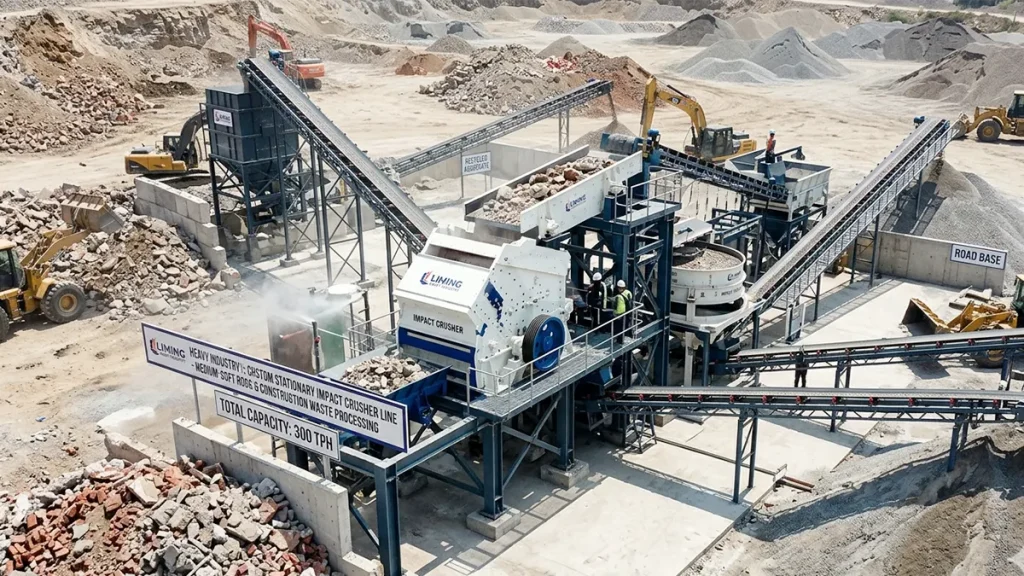
Our track record in offering custom solutions and responsive maintenance proves that we engineer financial survival into every weld. We do not sell generic funnels; we architect highly specific kinetic engines that dominate medium-soft rock and concrete rubbles.
Secure Your Kinetic Asset
Investing in a high-quality crushing plant means securing customized engineering and dependable maintenance support. If you deploy a generic, lightweight rotor into a recycling operation next month, the resulting rebar strangulation and asymmetric bearing destruction will permanently terminate your circuit amortization cycle. You must demand custom mass inertia and enforce a rigid protocol for impact crusher repair to ensure your operation survives its geology.

Get Solution & Quotation