
Blog
how much of the gold beneficiation cone crusher?
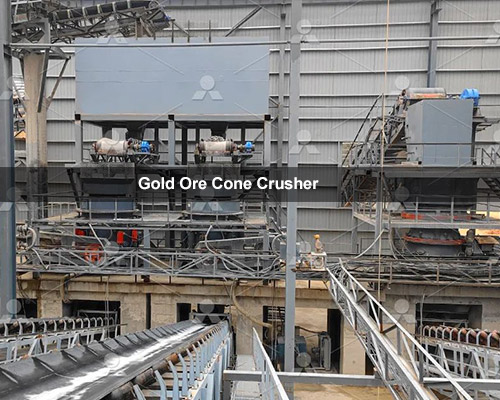
Navigating the mandates of the national Hilirisasi policy requires more than just achieving raw output quotas; it demands a radical restructuring of primary and secondary processing costs. When evaluating the true financial exposure of a crushing circuit, the question of “how much” is never limited to the initial price tag of the iron. The core metric is the comprehensive cost per ton of finished aggregate and its subsequent impact on downstream gold extraction efficiency. To thrive under local refinement mandates, operators must view the secondary crushing stage as the ultimate gatekeeper of profitability.
Overcoming Tuffaceous Breccia in North Sulawesi
Mechanical integrity under constant stress dictates the total cost of ownership over 5 years, not the upfront discount of an under-engineered machine.
In a recent gold mine project in North Sulawesi, operations encountered substantial volumes of tuffaceous breccia registering a Mohs hardness of 6.8. Local, low-cost cone crushers proved disastrously ill-equipped for this geology, suffering catastrophic main shaft fractures within 3 months of deployment. By replacing these failing units with the HPT300 Multi-cylinder Hydraulic Cone Crusher, the site achieved a continuous 20-hour daily duty cycle. The heavy-duty forged frame and oversized bearings demonstrated zero structural fatigue after 14,000 hours of operation, proving that high initial procurement value directly neutralizes long-term maintenance hemorrhage.
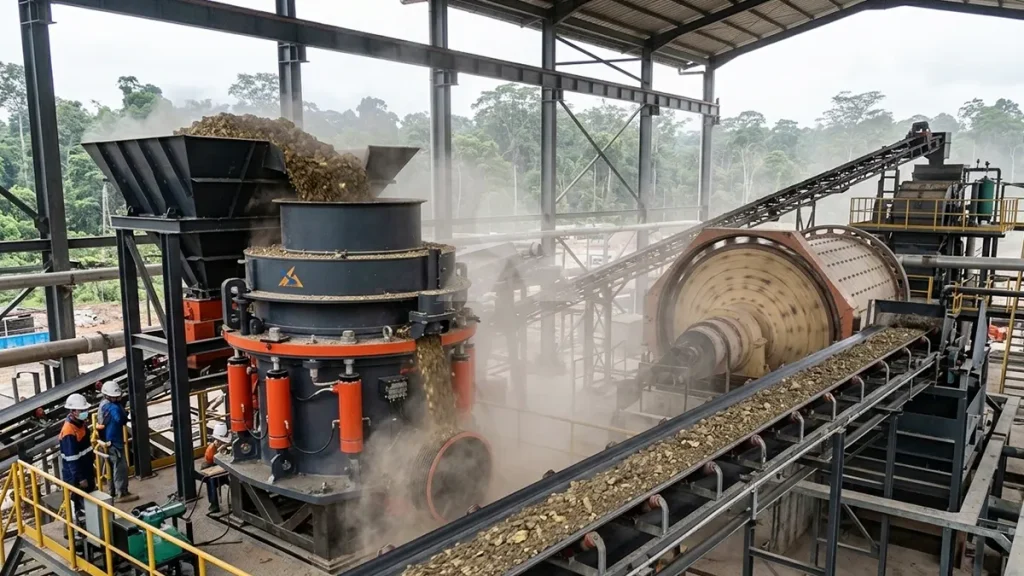
Crushing Instead of Grinding: The Kalimantan 800t/h Circuit
Shifting the size reduction burden from the ball mill back to the cone crusher is the single most effective method to compress the initial investment recovery cycle.
Analysis of a massive 800t/h gold circuit in Kalimantan illustrates this dynamic perfectly. By meticulously adjusting the CSS (Closed Side Setting) of the HPT500 to exactly 12.5mm, the P80 particle size of the product entering the ball mill was reduced by 18%. Ball mills are notoriously inefficient when fed oversized materials. Implementing this strict “crushing instead of grinding” strategy decreased the energy consumption of the secondary grinding stage by an astonishing 4.2 kW/h per ton. Over an annual production cycle, this precise particle size control fundamentally alters the financial viability of the entire CIL/CIP circuit.
| Operational Metric | Standard Refurbished Cone Crusher | Liming HPT500 Hydraulic Cone |
|---|---|---|
| P80 Feed to Ball Mill | Baseline / Unstable | 18% Reduction |
| CSS Stability under Load | Fluctuates, causing oversized feed | Maintains precise 12.5mm |
| Grinding Energy Differential | Baseline Consumption | Saves 4.2 kW/h per ton |
| Cost per ton of finished aggregate | High (due to grinding bottleneck) | Optimized & Scalable |
Abrasive Silica and Liner Longevity in Sumatra
Downtime is the silent killer of profitability; maximizing the continuous operational hours of wear parts directly protects downstream processing margins.
Mining districts in Sumatra are notorious for highly abrasive silica content within the gold-bearing ore. Refurbished machines, frequently deployed to artificially lower initial equipment spending, require complete liner replacements every 450 hours. The HPT series counters this extreme abrasion using Liming’s proprietary high-manganese alloy liners (Mn18Cr2). Under identical abrasive conditions, these robust liners achieved a verified service life of 1,150 hours. Tripling the wear life reduced the annual maintenance downtime by 15.5 days, keeping the refinement circuits fully supplied and operating without interruption.
Financial & Mechanical Ledger: HPT Series in Indonesian Gold Circuits
- Energy reduction in secondary grinding: 4.2 kW/h per ton
- Circuit throughput tested in Kalimantan: 800t/h
- Precise CSS calibration point: 12.5mm
- Geological hardness tolerance: Mohs 6.8
- Mn18Cr2 alloy liner lifespan in high-silica ore: 1,150 hours
- Structural fatigue threshold achieved: 14,000 hours
Technical Index: LH-HOW_MUCH_OF_THE_GOLD_BENEFICIATION_CONE_CRUSHER-April/2026-Ref-#82914
Site Log: Navigating the Hilirisasi Processing Mandates
- Why is CSS stability critical for the downstream CIL/CIP circuits?
- Fluctuating closed side settings allow oversized ore to bypass the crushing stage, exponentially increasing the power draw and wear rate of the downstream ball mills, which ultimately destroys the targeted cost per ton of finished aggregate.
- How does the HPT300 survive tuffaceous breccia when local models fracture?
- The robust design utilizes a thick forged main shaft and a fixed shaft structure, directing crushing forces efficiently rather than transferring lethal bending moments that snap inferior shafts within 3 months of heavy use.
- What is the true financial reality of utilizing refurbished equipment in Sumatra?
- While the purchase price appears favorable, replacing liners every 450 hours creates 15.5 days of hidden annual downtime, sabotaging the initial investment recovery cycle and halting continuous gold refinement.
Securing Downstream Processing Margins
By failing to achieve an 18% reduction in P80 feed size through advanced hydraulic crushing, operations force their ball mills to absorb the massive mechanical burden, directly resulting in an unrecoverable energy penalty of 4.2 kW/h per ton of processed ore. Stop starving your grinding circuit and recalibrate your secondary crushing stages immediately.
Stop Hemorrhaging Capital in the Grinding Circuit
“Assess the true impact of CSS stability on your downstream gold refinement operations.” — From the Desk of your Chief Investment Strategist

Get Solution & Quotation