Evaluating processing layouts for high-abrasion geology demands absolute mechanical discipline. During an infrastructure audit in Scandinavia this October 2025, a commercial aggregate facility was suffering from catastrophic downtime. They had attempted to process 220 MPa rock using blunt-force impactors rather than dedicated granite crushing equipment. The metallic screech of failing blow bars was a stark auditory indicator of severe over-stress. Crushing granite requires a fundamentally different kinetic approach compared to soft sedimentary rock. To maintain a profitable production-to-cost ratio, engineers must deploy a synchronized configuration of compressive machinery. Whether selecting a single granite crusher machine or architecting a complete multi-stage plant, matching the metallurgical durability of the equipment to the physical hardness of the stone is non-negotiable.
The Physics of Primary Reduction: Anchoring the Volumetric Flow
A stable mass balance begins by absorbing the initial kinetic shock of raw boulders.
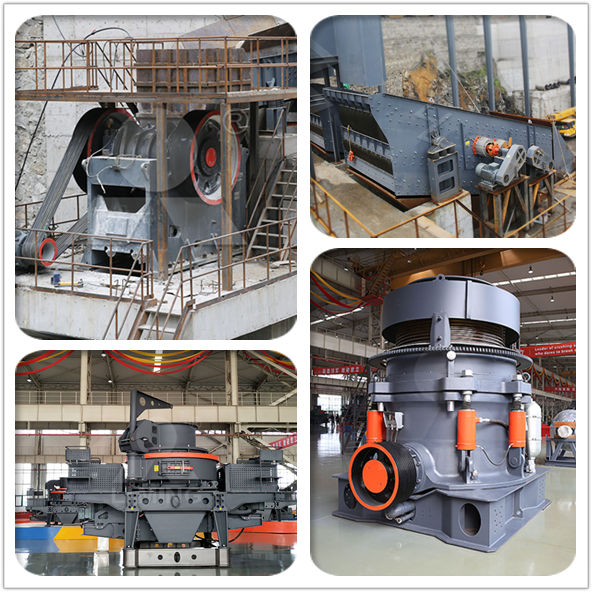
When raw, blasted rock arrives from the quarry face, its kinetic resistance is immense. Crushing granite, which frequently exceeds 200 MPa, instantly destroys standard impactors. To establish a reliable volumetric baseline, a dedicated granite jaw crusher like the PEW860 is mandatory. Powered by a 132 kW motor, this machine utilizes heavy-duty manganese jaw dies to compress 720mm boulders down to a manageable <200mm profile.
Operating multiple granite crushers in sequence requires the primary stage to act as a flawless gatekeeper. By utilizing an automated vibrating feeder to provide a continuous ribbon of rock, the jaw crusher prevents surge-feeding. This steady flow protects the toggle plate from extreme mechanical stress and ensures the downstream secondary crushers never run dry.
Secondary Laminated Reduction: The Hard Rock Mandate
The secondary crushing stage dictates the financial survival of the entire operation. The metallurgical demands of a basalt crusher and a river stone crusher are nearly identical to granite. All three of these highly abrasive materials possess high silica content that acts as an industrial grinding agent against steel armor.
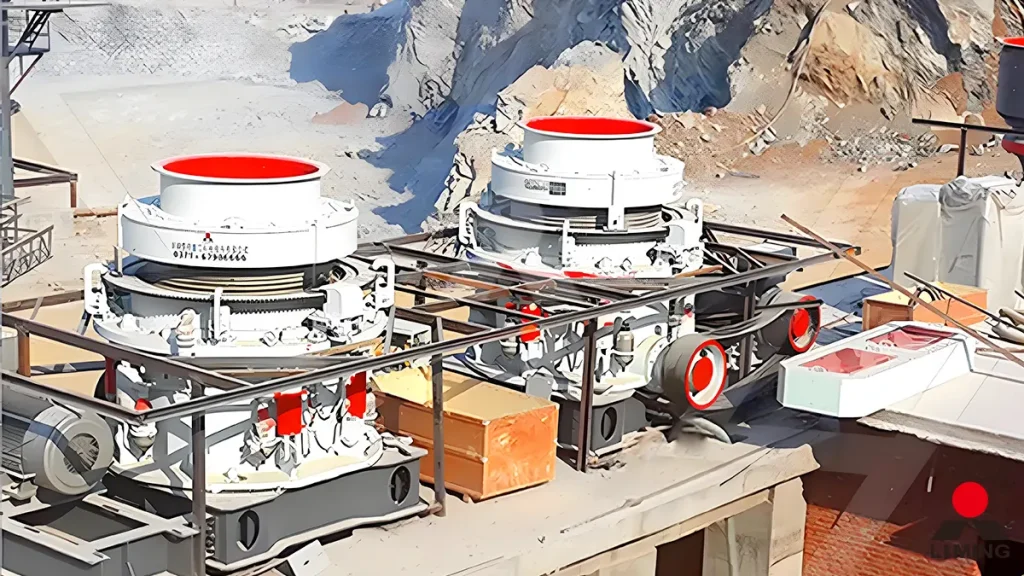
Figure 1: Laminated Crushing Dynamics. To survive extreme abrasion, a secondary granite crusher must utilize hydraulic clamping force. The HPT300 cone compresses the rock bed at 800 rpm, forcing the silica to fracture against itself, thereby preventing extreme manganese wear.
For these applications, the architecture mandates an HPT300 multi-cylinder hydraulic cone crusher. Utilizing 250 kW of kinetic power, the HPT300 enforces laminated fracture. This operational principle isolates the expensive manganese liners from direct abrasive wear, radically extending their lifespan and stabilizing the expenditure per shift.
Synchronized Configuration Matrix for Hard Rock Assets
A process diagram is merely theoretical until backed by rigid hardware tolerances.
Process Stage
Recommended Equipment
Capacity (tph)
Power (kW)
Architectural Mission
Primary Fracture
PEW860 Jaw Crusher
200-500
132
Absorb 200MPa volumetric shock
Secondary Sizing
HPT300 Cone Crusher
110-440
250
Laminated fracture for abrasive rock
Tertiary Shaping
VSI6X1150 Sand Maker
344-663
500 (250×2)
Cubical geometry & micro-crack elimination
Closed-Circuit Grading
S5X2460-3 Screen
100-800
30
Strict +20mm oversize recirculation
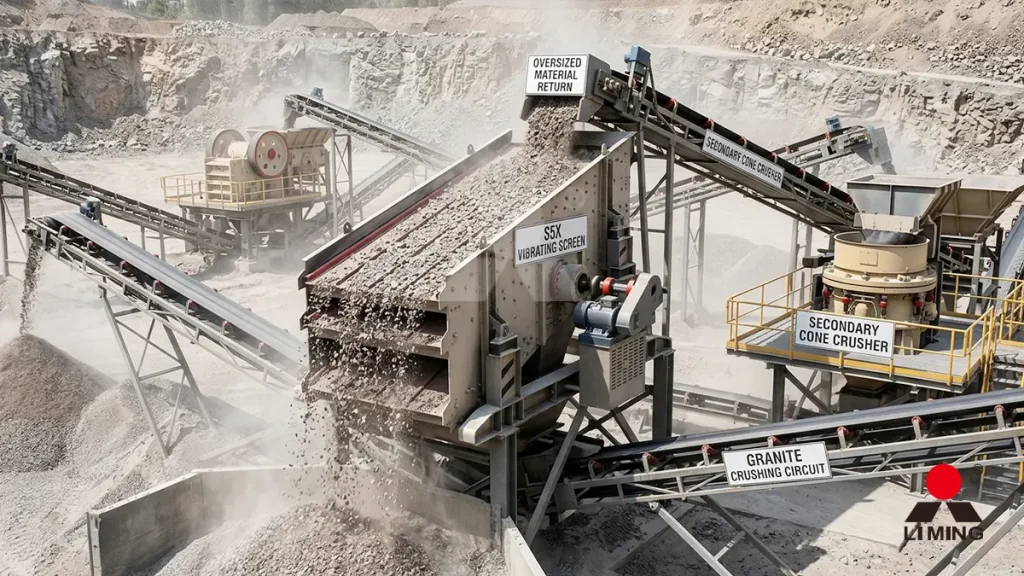
To produce premium aggregate, a complete granite crushing machine circuit must operate in a closed-loop. The S5X vibrating screen acts as the ultimate gatekeeper, actively returning any oversized rock back to the secondary cone to ensure exact geometric compliance.
Closing the Circuit: Precision Grading for a Granite Stone Crusher
Without closed-circuit screening, the final top-size of the aggregate remains mathematically uncontrollable. The S5X vibrating screen intercepts the material flow after the secondary and tertiary stages. It ensures that the final aggregate strictly meets the 0-20mm geometric requirements for high-grade structural concrete.
Figure 2: Mass Balance Control. The vibrating screen physically dictates the quality of the final aggregate. Any rock failing to pass the designated mesh is automatically recirculated, enforcing absolute grade compliance for the granite stone crusher plant.
By forcing a 20% recirculating load, the screen ensures the HPT300 cone operates in a continuous choke-fed state. This constant material density stabilizes the 250 kW amp draw and maximizes the inter-particle rock fracture, shielding the hardware from localized wear.
Sourcing a Reliable Granite Crusher Factory and Supplier
The operational endurance of heavy machinery relies heavily on supply chain integrity. Selecting a verified granite crusher factory and supplier ensures direct access to OEM high-chrome and manganese wear parts. In high-abrasion environments, non-OEM aftermarket parts frequently suffer from metallurgical inconsistencies, resulting in premature fracture under 200 MPa kinetic load.
A premier granite crusher supplier provides more than just metal; they provide engineering accountability. By verifying the exact alloy compositions of the jaw dies and cone mantles, procurement directors can confidently forecast their maintenance schedules, which is critical for maintaining the expenditure per shift and protecting the plant’s overall capital payback velocity.
Abrasive Wear Diagnostics & Hard Rock Post-Mortem
What physical evidence on site proves an impactor is mismatched with hard rock geology?
Inspecting a stalled circuit reveals the truth. If you deploy an impactor on hard silica, the high-chrome blow bars will appear melted or deeply grooved within 48 hours. Abrasive rock acts as an industrial grinding wheel against blunt-force impactors, transferring the financial burden directly to the daily maintenance ledger.
Historically, why did contractors struggle to produce premium aggregate from river stone?
Decades ago, operators attempted to force primary and secondary crushers to do the work of a tertiary shaper by tightening the CSS to extreme limits. This resulted in severe “ring bounce” and shattered eccentric shafts. True cubical aggregate from hard rock requires a dedicated, high-velocity VSI stage.
Why must the primary jaw output strictly match the secondary cone feed throat?
Do not rely on the transfer belt to fix a size mismatch. If the jaw outputs a 250mm slab into a cone designed for a 200mm ideal feed, the material will bridge above the mantle. This instantly starves the secondary stage, dropping the daily yield to zero until manually cleared.
How does closed-circuit screening mathematics dictate plant efficiency?
Calculating the mass flow proves that if a supplier fails to include a return conveyor in the blueprint, they are selling you an open-circuit plant. You will have zero control over your final top-size, rendering the aggregate unsellable for high-grade structural concrete.
Enforce Metallurgical Discipline to Accelerate Amortization
An industrial crushing circuit cannot be optimized by guesswork; it must be governed by strict mass balance blueprints aligned to geological reality. Deploying granite crushing equipment requires absolute synchronization between the primary jaw’s volumetric output and the secondary cone’s compressive limits. If you attempt to process abrasive rock with an impactor or fail to close the screening circuit, your expenditure per shift will hemorrhage through broken wear parts and rejected aggregate. Align your flow chart with your geology, partner with a verified supplier, and secure your capital payback velocity immediately.


Get Solution & Quotation