
Blog
Mobile Stone Crusher Plant Suppliers & Manufacturers
When evaluating supplier viability for 300 tph circuits, the primary fiscal metric is deployment velocity. True wheel-mounted chassis configurations eliminate the standard 30-day foundation pouring cycle, directly accelerating the initial payback window. Conversely, utilizing unsynchronized bolt-on modules guarantees a 15% increase in daily running costs due to parasitic power loss and vibrational fatigue.
300tph Granite Circuit: Mobile Chassis & Load Thresholds
- Production Target: 150-300 tph (Hard Rock)
- Recommended Configuration: NK1213C Impact Mobile Plant
- Main Crusher Power: 228.5 kW
- Max Feed Size: 550 mm
- Mobility Format: Pneumatic-Tire (Foundation-Free)
Technical Index: LH-MOBILE_STONE_CRUSHER_PLANT_SUPPLIERS_&_MANUFACTURERS-NOV/2026-Ref-#48291
The Financial Trap of Component Integrators
A 30-day foundation delay costs more than the physical machinery. When quarry owners search for mobile crushing equipment providers, they fundamentally misunderstand the difference between an engineering manufacturer and an assembler. An assembler simply buys a generic diesel engine, sources a third-party jaw, and bolts them onto an under-engineered steel frame. The physics do not care about your initial equipment price.
A mismatched frame will absorb crushing impact through catastrophic structural deflection, fracturing welds within the first 500 hours of high-load operation.
Legitimate manufacturers engineer the chassis to synchronize with the specific harmonic frequency of the crusher. We see this constantly on sites shifting from stationary to mobile. A legitimate manufacturer guarantees synchronized circuit matching. For example, pairing a 160kW C6X jaw directly with an optimized feeder on the exact same frame prevents the hidden downtime caused by piecemeal assembly. If the feeder pushes 350 tph into a jaw rated for 290 tph because the electrical interlocks are rudimentary, your daily running costs will hemorrhage through burned-out generator stators and seized bearings. You will smell the sharp scent of scorched grease long before the telemetry warns you of a failure.
Accelerating the Profitability Timeline: Wheel-Mounted Physics
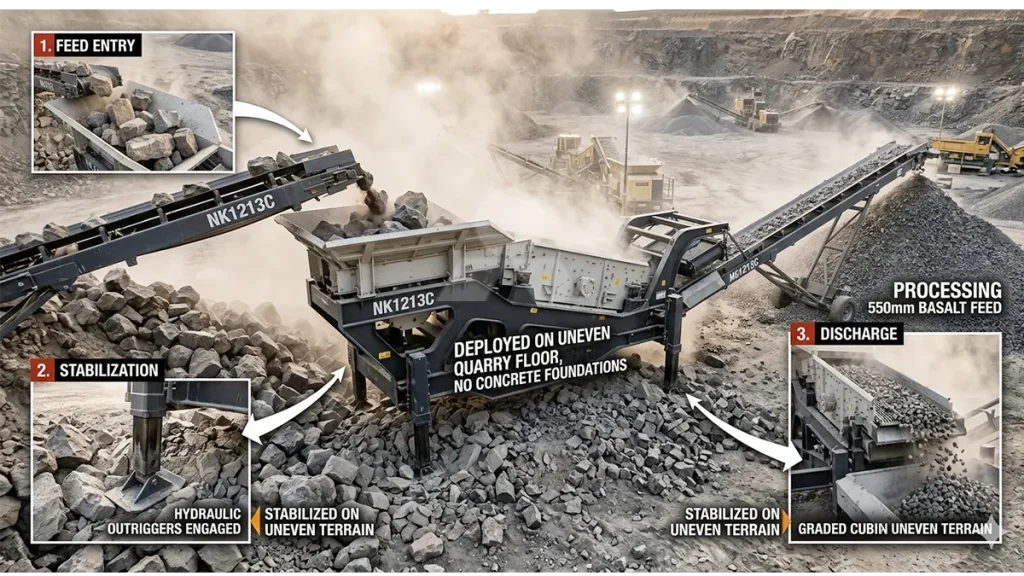
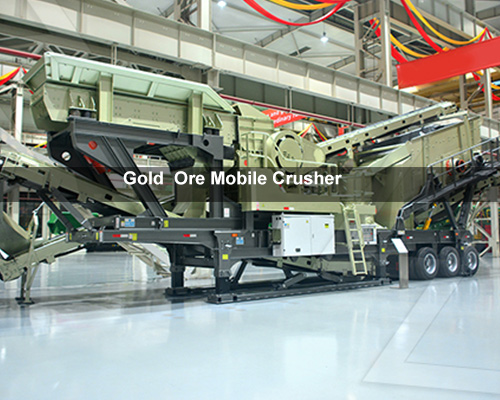
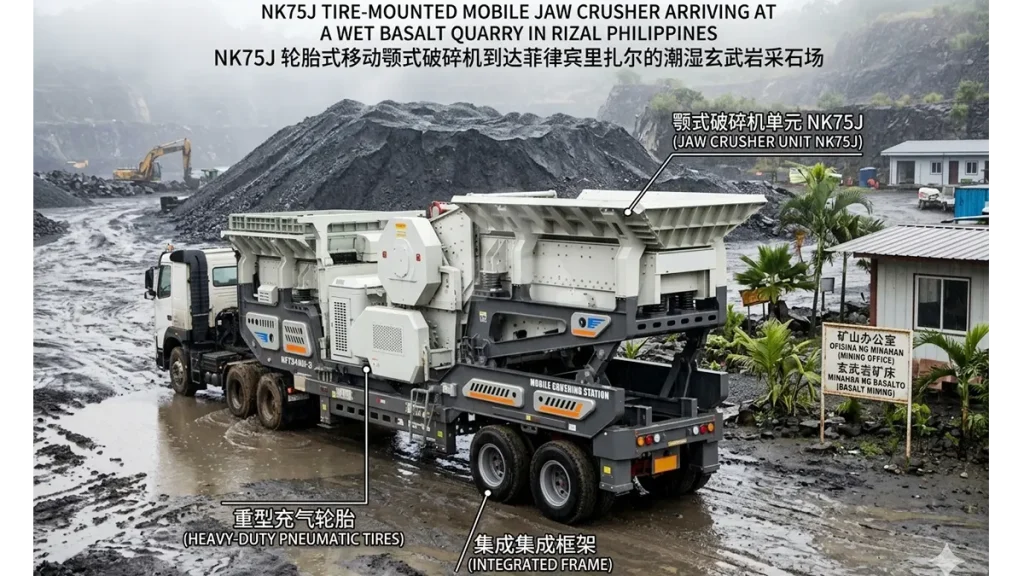
True manufacturers engineer wheel-mounted series to bypass civil engineering bottlenecks. Take the NK1213C impact mobile plant. Because it utilizes a heavy-duty pneumatic-tire chassis, we can eliminate up to 30 days of traditional foundation pouring. This drastically accelerates the profitability timeline. The machine rolls onto the compacted site, the hydraulic outriggers deploy, and the material flow begins within 48 hours.
This is where capital payback velocity is determined. Cheap integrators provide manual jacking legs that shift under the kinetic force of a 228.5 kW impactor rotor. When the chassis shifts even 5mm out of level, the belt alignment fails. You end up with a sticky industrial paste of wet fines dragging against the conveyor skirts, burning through your fuel and power expenses.
Energy Volatility and Tracked Dual-Power Systems
Relying solely on diesel power in remote, high-altitude locations is fiscal suicide. The expenditure per shift fluctuates wildly based on fuel supply chains. Tier-1 suppliers provide energy-resilient tracked options to combat this exact variable. The Vertex VTJ1180 utilizes a dual-power (diesel/electric) drive system. When grid power is stable, the plant runs on electricity, dropping the daily running costs by a massive margin. When the grid drops, the onboard 250 kW diesel unit takes over.
Running a 1160×760 jaw crusher on pure diesel 24/7 destroys your asset amortization cycle due to extreme engine wear.
Integrators avoid dual-power systems because the electrical engineering requires custom frequency drives. If a supplier cannot offer an electric-drive bypass on a tracked unit, they are not a true manufacturer. The vibration felt through the steel-toed boots of an operator on a pure diesel rig is wasted energy. Dual-power systems route that energy directly into the crushing cavity dynamics, stabilizing the tph output.
Circuit Synchronization in Pneumatic-Tire Setups
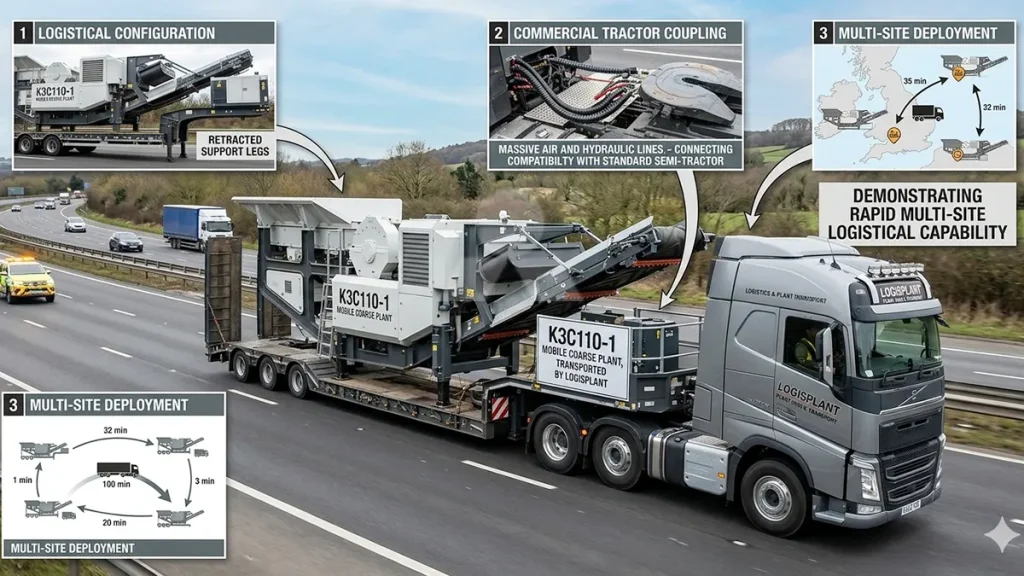
Multi-site contractors face severe logistical overhead when moving equipment. The K3 Series, specifically the K3C110-1, integrates the entire coarse crushing and screening workflow onto a single pneumatic-tire chassis. This is not a bolt-on afterthought. The 200 kW main machine is mechanically balanced against the vibrating screen’s counterweights.
| Process Stage | Recommended Model | Capacity (tons per hour) | Power (kilowatts) | Mounting Type |
|---|---|---|---|---|
| Primary Wheel-Mounted | NK1213C | 150-300 | 228.5 | Pneumatic/Tire-mounted |
| Primary Tracked (Dual Power) | VTJ1180DP | 340-400 | 250 | Crawler/Track-mounted |
| Integrated Coarse (Wheel) | K3C110-1 | 200-300 | 200 | Pneumatic/Tire-mounted |
Review the 228.5 kilowatts power draw of the NK1213C alongside its pneumatic/tire-mounted chassis. That specific power-to-weight ratio is how manufacturers prevent the chassis from cracking under the torque of 300 tons per hour feed rates. Assemblers ignore this ratio entirely.
Capital Auditor’s Memo: Mobile Chassis Failure Modes
- Why do cheap mobile impactors shear their motor mounts within 3 months?
- Look at the vibration isolation pads between the CI5X1213 crusher body and the steel frame. Integrators bolt steel directly to steel. At 228.5 kW, the kinetic feedback rips the threads right out of the block.
- Is dual-power truly necessary if diesel is locally inexpensive?
- Ten years ago, we used to solve this by bringing massive external generators. Today, the VTJ1180DP proves that pure diesel systems suffer a 40% faster asset depreciation rate due to constant engine vibration transferred to the hydraulic pumps.
- Can we bypass the hydraulic outriggers on the NK series for a faster start?
- Do not ignore the ground bearing pressure limits. Running a 150-300 tph circuit purely on the pneumatic tires without deploying the hydraulic legs will permanently warp the main axle.
- How does a single-chassis K3 system affect the payback window?
- When you push beyond 200 tph, every hour spent tearing down and wiring standalone conveyors costs capital. The K3C110-1 eliminates 5 individual electrical tie-ins, removing the most common electrical faults from the equation.
Securing Fiscal Viability in Mobile Deployments
Weighing the initial equipment price against the physical endurance of the machinery is the only way to avoid bankruptcy in contract crushing. The 228.5 kW kinetic load of an impactor demands a chassis engineered specifically for that harmonic frequency, not a generic frame bought off the shelf. If you continue to purchase from integrators who cannot offer true dual-power tracking or foundation-free pneumatic setups, expect your expenditure per shift to exceed your gross revenue by next month.
Stop Funding Integrator Failures
“Lock down your capital payback window before authorizing the purchase order.” — From the Desk of your Investment Strategist
Audit Asset Amortization Metrics

Get Solution & Quotation