
Blog
Hard Rock Crusher Plant Cost Estimate & Investment Guide
For investors in the mining and aggregate industry, the most critical question is often the most complex: “What is a realistic hard rock crusher plant cost estimate?” Whether you are processing granite, basalt, or quartzite, hard rock applications demand high-performance machinery that can withstand extreme abrasion while maintaining consistent throughput.
At Liming Heavy Industry, we help quarry owners transition from “guessing” to “forecasting.” A successful plant isn’t just about the lowest purchase price; it’s about the Total Cost of Ownership (TCO). This guide breaks down the capital expenditures and operational expenditures (OPEX) you need to build a profitable hard rock crushing line.
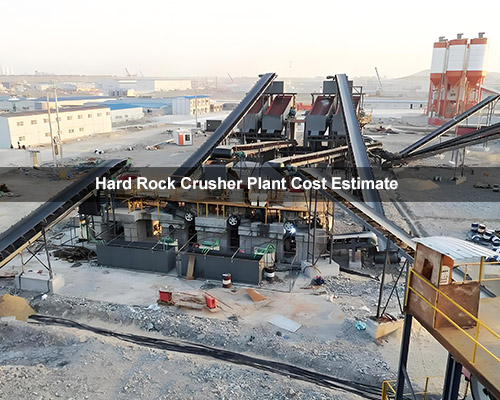
Section 1: Understanding the CAPEX Breakdown
The initial investment for a hard rock plant typically involves three main crushing stages. Unlike soft rock (limestone), hard rock requires compression crushing to minimize wear part consumption.
1. Primary Crushing Stage
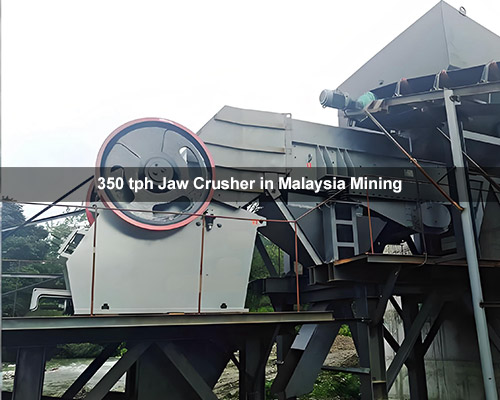
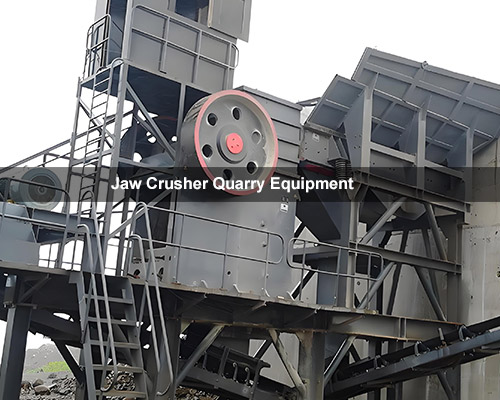
The Jaw Crusher is the workhorse here. It handles the largest feed sizes and reduces them to a manageable size for secondary crushing.
- Key Equipment: PE or PEW Series Jaw Crusher.
- Cost Factor: Large feed openings (e.g., 800x1060mm) significantly increase the price but reduce the need for expensive primary blasting.
2. Secondary & Tertiary Crushing Stage
For hard rock, Cone Crushers are mandatory. Using an impact crusher on granite will lead to unsustainable wear part costs.
- Key Equipment: HST Single-Cylinder or HPT Multi-Cylinder Hydraulic Cone Crusher.
- Cost Factor: Multi-cylinder models offer better product shape and higher automation but come with a higher initial hard rock crusher plant cost estimate.
3. Shaping & Sand Making (Optional)
If your market requires high-quality manufactured sand or “cubical” aggregate for high-grade concrete, a VSI (Vertical Shaft Impactor) is added.
- Key Equipment: VSI6X Series Sand Making Machine.
Section 2: Typical Equipment List & Specifications
Below is a standard configuration for a 200-250 TPH (Tons Per Hour) hard rock crushing plant, providing a baseline for your investment calculation.
| Process Stage | Recommended Equipment | Primary Function | Typical Power (kW) |
|---|---|---|---|
| Feeding | GZD1100×4200 | Uniform feeding & pre-screening | 22 |
| Primary Crush | PEW860 Jaw Crusher | Heavy-duty primary reduction | 110 |
| Secondary Crush | HPT300 Cone Crusher | Hard rock size reduction | 220 |
| Screening | 2YZS2460 | Sizing finished products | 30 |
| Conveying | B650/B800/B1000 | Material transport | Varies by length |
Section 3: OPEX – The Hidden Part of Your Cost Estimate
When calculating your hard rock crusher plant cost estimate, the purchase price is only about 40-50% of the financial picture over five years. Operational costs (OPEX) will determine your daily profit margin.
1. Electricity and Power
Hard rock crushing is energy-intensive. A 200TPH plant typically requires 400-600kW of total installed power. In regions with high electricity costs, investing in high-efficiency motors can save thousands of dollars annually.
2. Wear Parts (Consumables)
This is the “silent killer” of quarry profits. For hard rock:
- Jaw Plates: Need replacement every 3-6 months depending on abrasiveness.
- Cone Liners (Mantle/Bowl): Critical for maintaining the CSS (Closed Side Setting) and product quality.
- Budgeting: Always set aside 10-15% of your annual revenue for wear parts and maintenance.
3. Labor and Automation
Modern plants from Liming Heavy Industry feature PLC control systems. While this increases the initial hard rock crusher plant cost estimate, it reduces the required headcount from 10-12 people down to 4-5, significantly lowering your long-term OPEX.
Section 4: ROI Analysis – How Fast Can You Pay Back?
A well-designed 200TPH granite plant in a high-demand market (like the Philippines or Kenya) can achieve a payback period of 12-18 months.
Example Calculation:
- Daily Output: 200 tons/hr x 10 hours = 2,000 tons.
- Market Price (Avg): $10 – $15 per ton.
- Operating Cost (Avg): $4 – $6 per ton.
- Daily Net Profit: ~$12,000.
[Insert Image: ROI chart showing the payback period comparison between high-quality vs. low-cost equipment. Alt Text: ROI analysis for hard rock crushing plant investment]
FAQ Section
1. How much does a 100TPH hard rock crusher plant cost?
A basic 100TPH stationary plant for hard rock typically starts around $150,000 – $250,000 USD for the main equipment. This excludes civil works, foundations, and local shipping/installation. For a precise hard rock crusher plant cost estimate, a site-specific layout is required.
2. Why is a cone crusher better than an impact crusher for hard rock?
Impact crushers use “striking” force which causes rapid wear on blow bars when hitting hard rock like granite. Cone crushers use “compression” force, which is significantly more efficient and results in much lower wear part costs per ton of material processed.
3. Can I get a mobile version of a hard rock plant?
Yes, Liming offers the K-Series mobile crushing plants. While the initial cost is 20-30% higher than a stationary plant, you save significantly on civil engineering, foundations, and the cost of hauling raw materials to a fixed site.
Getting an accurate hard rock crusher plant cost estimate is the foundation of your quarry’s success. By balancing CAPEX with high-efficiency technology, you ensure that your plant remains profitable even as material prices fluctuate. Don’t settle for a generic quote—demand a solution designed for your specific rock type and capacity goals.


Get Solution & Quotation