
Blog
Mobile Jaw Crushing Plant for River Stone Processing
River stone and pebbles are among the most sought-after resources for high-quality concrete aggregate due to their hardness and natural shape. However, their high silica content and the logistical challenges of riverbank extraction make them difficult to process efficiently.
For quarry owners and contractors, the traditional method of hauling raw boulders to a fixed plant is becoming obsolete due to rising fuel costs. The industry standard solution is the Mobile Jaw Crushing Plant—specifically designed to turn riverbeds into productive worksites.
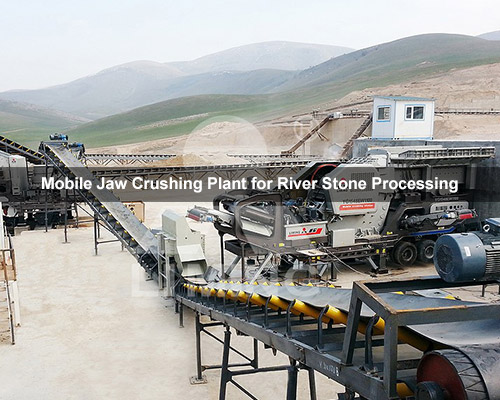
The Challenge: Why River Stone is Difficult to Crushing
Processing river stone presents three distinct challenges that standard stationary crushers often fail to address economically:
- Extreme Abrasion: River stone often has high silica content, causing rapid wear on jaw plates and liners.
- Difficult Terrain: Riverbanks are often narrow, uneven, or prone to moisture, making concrete foundations for fixed plants impossible.
- Logistics Costs: Transporting large, uncrushed boulders from the river to a processing center is inefficient and damages trucks.
The Solution: Liming K Series Mobile Jaw Crushing Plant
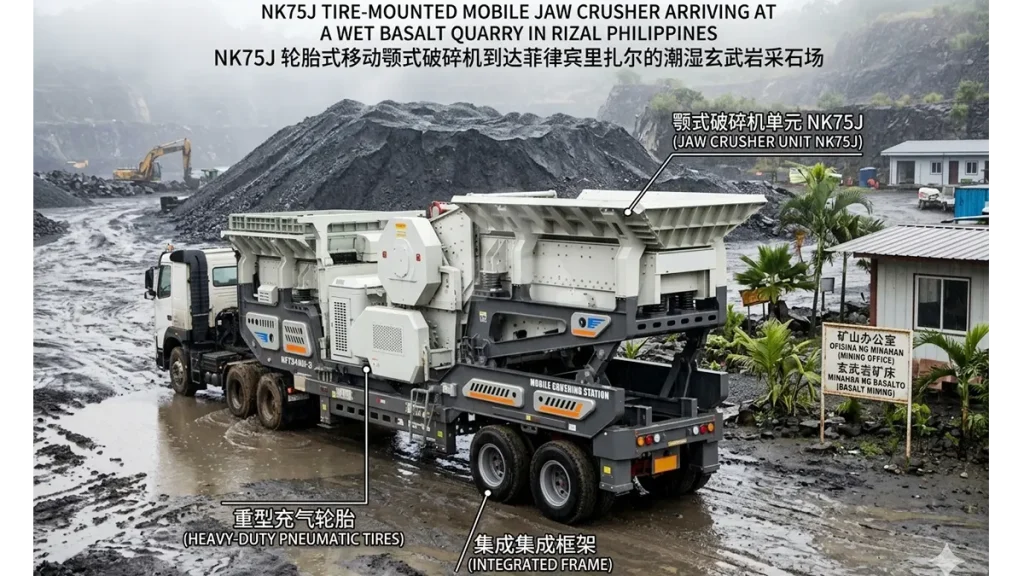
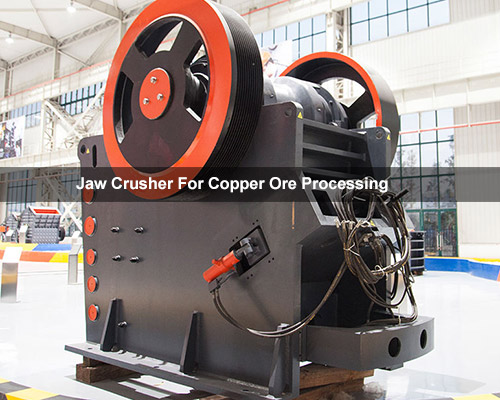
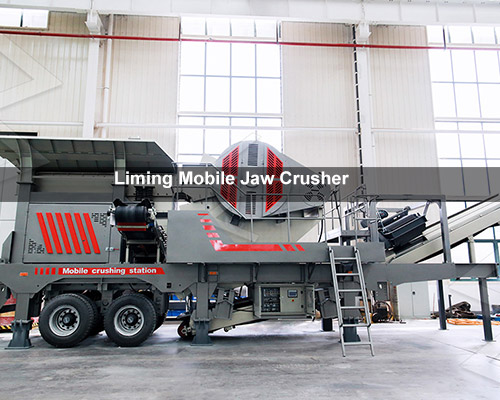
Liming Heavy Industry has engineered the NK Series Mobile Jaw Crushing Plant to tackle these exact pain points. By integrating the vibrating feeder and the high-performance PE or C6X Series Jaw Crusher onto a single chassis, we bring the factory to the raw material.
1. Process Flow and Configuration
The mobile unit operates as a complete primary crushing line:
- Feeding: A vibrating feeder (GF Series) loads the raw river boulders evenly into the crusher while pre-screening soil and waste.
- Primary Crushing: The Jaw Crusher exerts massive compressive force to break large boulders down to medium size (typically 100mm–300mm).
- Discharge: An integrated belt conveyor moves the crushed material to a stockpile or directly into a secondary mobile cone crusher for fine shaping.
2. Key Technical Advantages
- Foundation-Free Setup: Hydraulic legs allow for rapid installation. You can start crushing within hours of arrival at the riverbank.
- Boat-Shaped Frame: The chassis is designed with a “boat-shaped” structure, providing a lower center of gravity and superior stability on uneven river terrain.
- Optimized Wear Parts: Liming uses high-manganese steel jaw plates (Mn18Cr2) specifically heat-treated to withstand the abrasion of river stone.
Technical Specifications: Mobile Jaw Crusher Series
Below are the specifications for our most popular mobile jaw configurations suitable for river stone projects.
| Model | Main Crusher | Max Feed Size (mm) | Capacity (t/h) | Transport Dimension (mm) |
|---|---|---|---|---|
| KE600-1 | PE-600×900 | 500 | 50-160 | 12000×2550×3900 |
| KE750-1 | PE-750×1060 | 630 | 110-320 | 13500×2800×4300 |
| KC96-1 | C6X-96 (European) | 650 | 180-450 | 14000×2900×4400 |
Liming Engineer’s Tip: “When processing river stone, the CSS (Closed Side Setting) of the jaw crusher is critical. Because river stone is round and smooth, it can sometimes ‘pop’ out if the nip angle is too large. We recommend using toothed jaw plates rather than smooth ones to grip the round stones better, ensuring a consistent throughput and reducing slippage.”
Project Case: 200TPH River Stone Production Line in Philippines
Location: Mindanao, Philippines
Material: Hard River Basalt
Equipment: KE750-1 Mobile Jaw Plant + Mobile Cone Crusher
Feedback: “The river site was narrow and prone to flooding, so we couldn’t build a concrete foundation. Liming’s mobile jaw plant allowed us to drive directly onto the gravel bar, crush the stone, and move the machine to higher ground during the rainy season. We saved over 30% on material transport costs in the first year.”
Frequently Asked Questions (FAQ)
1. Can the mobile jaw crusher handle wet river stone?
Yes. The vibrating feeder is equipped with grizzly bars that can pre-screen out mud and fine sand before the material enters the crusher, preventing clogging.
2. How is the mobile plant powered?
Liming mobile plants offer dual-power options. They can run on external grid electricity (most cost-effective) or an integrated diesel generator for remote river sites with no power access.
3. What is the maintenance cycle for the jaw plates on river stone?
River stone is abrasive. While standard plates last 3-4 months, Liming’s heavy-duty Mn18Cr2 plates typically last longer. We recommend flipping the jaw plates every few weeks to ensure even wear.
4. How much does a mobile jaw crushing plant cost?
The price depends on the specific model and capacity (e.g., 100tph vs 400tph). However, mobile plants generally offer a higher ROI for short-term projects (1-3 years) due to the elimination of civil engineering and installation costs.
For processing river stone, the Liming Mobile Jaw Crushing Plant offers an unbeatable combination of flexibility and power. By eliminating the need for expensive hauling and concrete foundations, it reduces operational costs while maintaining high productivity in difficult terrains. Whether you are a contractor moving between sites or a quarry owner working on riverbanks, Liming provides the technology to maximize your yield.

Get Solution & Quotation