
Blog
Ballast Jaw Crusher for Railway Construction
Introduction
Railway ballast forms the bedrock of railway infrastructure, providing drainage, stability, and support to the tracks that connect our world. As a critical component in transportation networks, ballast crusher machinery must produce precisely graded aggregate that meets rigorous engineering specifications. Liming Heavy Industry has pioneered crushing technology specifically designed for railway applications, offering robust solutions that optimize ballast production efficiency and quality. This comprehensive guide explores the technical excellence behind our rail ballast crusher systems and their transformative impact on modern railway construction.
Understanding Railway Ballast: Material Specifications and Requirements
Railway ballast consists of crushed stone that forms the trackbed underneath railway ties. Its primary functions include distributing load, providing drainage, inhibiting vegetation growth, and facilitating maintenance operations. The ideal ballast material must be angular, durable, resistant to deformation, and properly graded—typically between 25mm and 50mm.
The most suitable rocks for railway ballast include basalt, granite, quartzite, and other high-hardness materials with high compressive strength. These materials possess the necessary physical properties to withstand the immense pressures and vibrations generated by passing trains while maintaining proper drainage characteristics. Our ballast crusher railways experts recommend basalt particularly due to its high hardness and high silica content, which provides exceptional durability under continuous loading conditions.
Railway Ballast Production Process: From Raw Stone to Precision Ballast
Producing high-quality railway ballast requires a meticulously planned crushing and screening process:
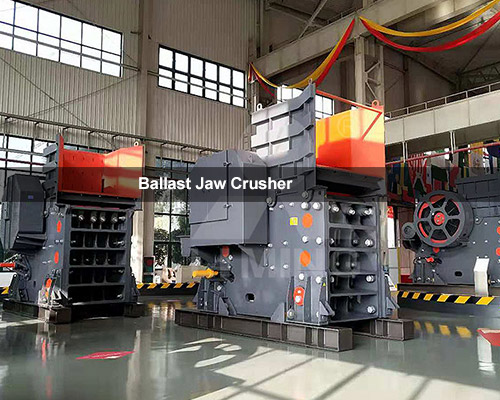
- Primary Crushing: Large raw material (typically 500-600mm) undergoes initial size reduction. Our ballast jaw crusher equipment excels in this stage, processing high volumes of raw material with exceptional efficiency and reliability.
- Secondary Crushing: Further reduction using cone crusher or impact crusher to achieve intermediate sizes.
- Tertiary Crushing: Fine-tuning particle shape and removing excess fines to meet exact ballast specifications.
- Screening: Precise grading through multiple deck vibratory screens to ensure proper size distribution.
- Washing (Optional): Removing dust and fine particles to enhance drainage properties.
This multi-stage approach ensures the final ballast product exhibits the angularity, interlocking capability, and mechanical stability required for railway applications. Each rail ballast crusher system we design incorporates this comprehensive processing philosophy to deliver optimal results.
Liming Heavy Industry Crusher: Application in Railway Ballast Production
At Liming Heavy Industry, we engineer crushing solutions specifically optimized for railway ballast production. Our equipment range covers the entire ballast manufacturing process:
Primary Crushing Solutions
Our jaw crusher serve as the workhorses in ballast production plants, capable of processing the hardest rocks with exceptional reliability. The deep crushing chamber design ensures high reduction ratios and continuous processing capability, essential for meeting the substantial volume requirements of railway projects.
Secondary and Tertiary Processing
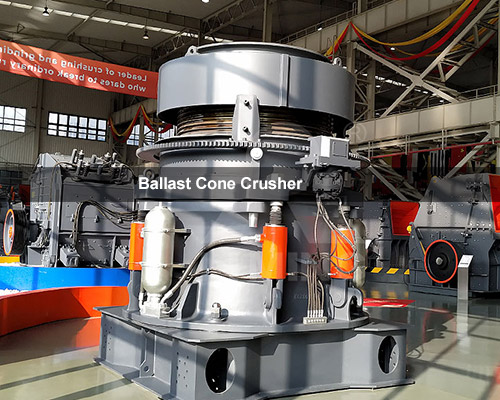
For further refinement of ballast material, our cone crusher and impact crusher deliver precise particle shape control. The inter-particle crushing action in our cone crusher produces the optimally angular particles that create the stable, interlocking ballast bed crucial for railway safety and performance.
Mobile Ballast Crushing Solutions
Recognizing the distributed nature of railway projects, our mobile crushing plants offer unprecedented flexibility. Mobile solutions reduce transportation costs and enable on-site processing in remote locations. This mobility proves particularly valuable for railway maintenance and expansion projects where ballast production must occur at multiple points along the rail corridor.
Ballast Crusher Capacity and Equipment Types
Selecting the appropriate ballast crusher requires careful consideration of production requirements, material characteristics, and project specifications:
Jaw Crusher for Ballast Production
Our jaw crusher series for ballast applications includes models with capacity ranges from 50 t/h to 800 t/h, capable of handling feed sizes up to 600mm. The robust construction, deep crushing chambers, and optimized kinematics ensure consistent output of well-shaped ballast material even with abrasive feed stocks.
Impact Crusher for Ballast Applications
For less abrasive materials, our impact crusher deliver exceptional reduction ratios and cubical product shape. The PF-100 model, for instance, processes 150-200 t/h with a maximum feed size of 600mm, making it ideal for primary crushing applications in ballast production.
Mobile Ballast Crushing Plants
Our track-mounted mobile plants combine primary and secondary crushing stages with integrated screening systems specifically configured for ballast production. The Y3S1848JYS8623 model represents our engineering excellence in this category, offering complete processing capability in a single mobile unit.
| Crusher Type | Model Examples | Capacity Range | Max Feed Size | Application |
|---|---|---|---|---|
| Jaw Crusher | JC Series, C6X Series | 50-800 t/h | 600mm | Primary Crushing |
| Cone Crusher | HPT Series, HST Series | 60-700 t/h | 240mm | Secondary/Tertiary |
| Impact Crusher | CI5X Series, VSI6X Series | 70-500 t/h | 600mm | Secondary/Shape Correction |
| Mobile Plant | K Series, Y Series | 70-400 t/h | Various | Complete Mobile Solution |
Innovative Technology in Liming Heavy Industry Ballast Crusher
Technological advancement drives our approach to ballast crusher design, with several proprietary innovations delivering superior performance:
Advanced Control Systems
Our crusher incorporate intelligent control technology that continuously monitors and optimizes performance parameters. These systems automatically adjust crusher settings in response to feed material variations, ensuring consistent ballast quality while maximizing production efficiency.
Wear Part Optimization
Through extensive research into material science, we’ve developed specialized alloys for wear parts that significantly extend service life in abrasive ballast applications. Our manganese steel formulations demonstrate longer lifespan when processing abrasive materials like basalt, substantially reducing operating costs for ballast producers.
Hydraulic Protection Systems
Modern ballast jaw crusher designs incorporate sophisticated hydraulic overload protection that automatically releases tramp material and resets without manual intervention. This technology minimizes downtime and prevents catastrophic damage from uncrushable objects.
Energy Efficiency Innovations
Our crusher feature power-saving technologies that reduce energy consumption compared to conventional designs, delivering significant operational cost savings while maintaining high production capacity essential for large-scale railway projects.
Common Challenges in Ballast Production and Professional Solutions
Producing high-quality railway ballast presents several technical challenges that our equipment specifically addresses:
Wear Management in Abrasive Materials
The very hardness that makes materials like basalt and granite ideal for ballast also accelerates wear on crushing components. Our solution incorporates quick-change wear part systems and specialized alloy compositions that extend service life while maintaining product consistency.
Consistent Particle Shape Optimization
Achieving the optimal angular particle shape crucial for ballast interlock requires precise crushing chamber designs. Our ballast crusher railways specialists have developed chamber profiles that maximize inter-particle crushing, producing the necessary particle morphology without compromising production efficiency.
Capacity Maintenance Under Peak Demands
Railway projects often face tight deadlines requiring maximum production output. Our rail ballast crusher equipment designs incorporate large feed openings, high-performance drives, and optimized flow paths that sustain nameplate capacity even under continuous operation.
Environmental Compliance
Modern quarry operations must address dust and noise emissions. Our ballast crushing plants incorporate comprehensive dust suppression systems and acoustic damping technology that maintain regulatory compliance without compromising operational efficiency.
Case Study: High-Capacity Ballast Production for National Railway Project
Project Overview
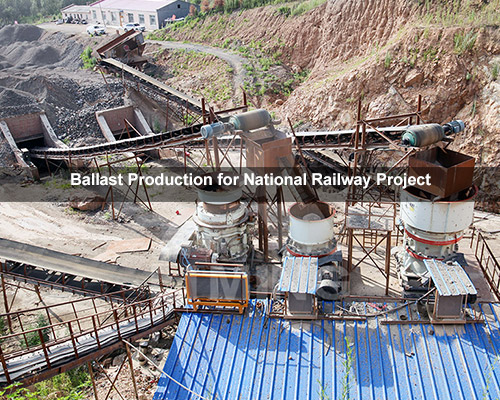
The project required 450,000 tons of high-quality ballast meeting stringent national railway specifications, with completion within 12 months. The primary material was basalt with compressive strength exceeding 200 MPa.
Technical Solution
We configured a three-stage crushing plant featuring:
- Primary: JCE European Type Jaw Crusher
- Secondary: HPT Hydraulic Cone Crusher
- Tertiary: VSI6X Impact Crusher for particle shaping
- Integrated screening with multi-deck vibratory screens
Performance Results
- Production Efficiency: Sustained output of 350 t/h, 15% above project requirements
- Product Quality: 98% compliance with particle size and shape specifications
- Operational Reliability: 94% operational availability over the project duration
- Cost Performance: 12% reduction in production cost per ton compared to conventional solutions
This case exemplifies how our specialized ballast crusher solutions deliver tangible performance advantages in demanding railway infrastructure applications.
Why Choose Liming Heavy Industry for Your Ballast Crusher Needs
Engineering Expertise
With decades of specialized experience in crushing technology for construction and mining applications, we bring profound technical understanding to every ballast jaw crusher solution we deliver. Our engineers work collaboratively with clients to optimize crushing circuits specifically for ballast production requirements.
Comprehensive Product Range
From stationary plants for high-volume production to mobile solutions for distributed projects, we offer the industry’s most complete range of ballast crusher equipment. This enables us to provide unbiased recommendations specifically tailored to each client’s operational context and business objectives.
Proven Global Experience
Our equipment operates successfully in diverse conditions worldwide, from African quarries to European infrastructure projects. This global perspective informs our design philosophy, ensuring robust performance across varying material characteristics and operational environments.
Lifecycle Support Philosophy
We transcend traditional manufacturer responsibilities by providing comprehensive support throughout the equipment lifecycle. From initial configuration and commissioning to wear part optimization and performance upgrades, we partner with our clients to maximize long-term operational efficiency.
Conclusion: Building Better Railways with Advanced Ballast Crusher
Railway ballast forms the foundation of safe, reliable rail transportation networks, and producing this critical material requires crushing equipment of exceptional capability and reliability. Liming Heavy Industry has dedicated decades to refining ballast crusher technology that specifically addresses the unique demands of railway applications.
From our high-capacity ballast jaw crusher models that process the hardest materials to our mobile solutions that bring processing to the project site, we offer comprehensive technologies for the railway sector. Our continued investment in research and development ensures that we remain at the forefront of crushing technology, consistently delivering innovations that enhance performance, reduce operating costs, and improve final product quality.
For railway authorities, construction firms, and aggregate producers seeking to optimize their ballast production capabilities, we invite you to explore the Liming Heavy Industry advantage. Contact our technical specialists today to discover how our purpose-engineered crushing solutions can transform your ballast production operations.

Get Solution & Quotation